

Can fewer apps really mean fewer bills?
Azea Research · 8 October 2026
An AI subscription is easy to justify when you buy it. One helps you write. Another makes the pictures you like. A third looks useful for that video you keep meaning to finish. Then renewal day arrives, and you realise how little of each service you used.
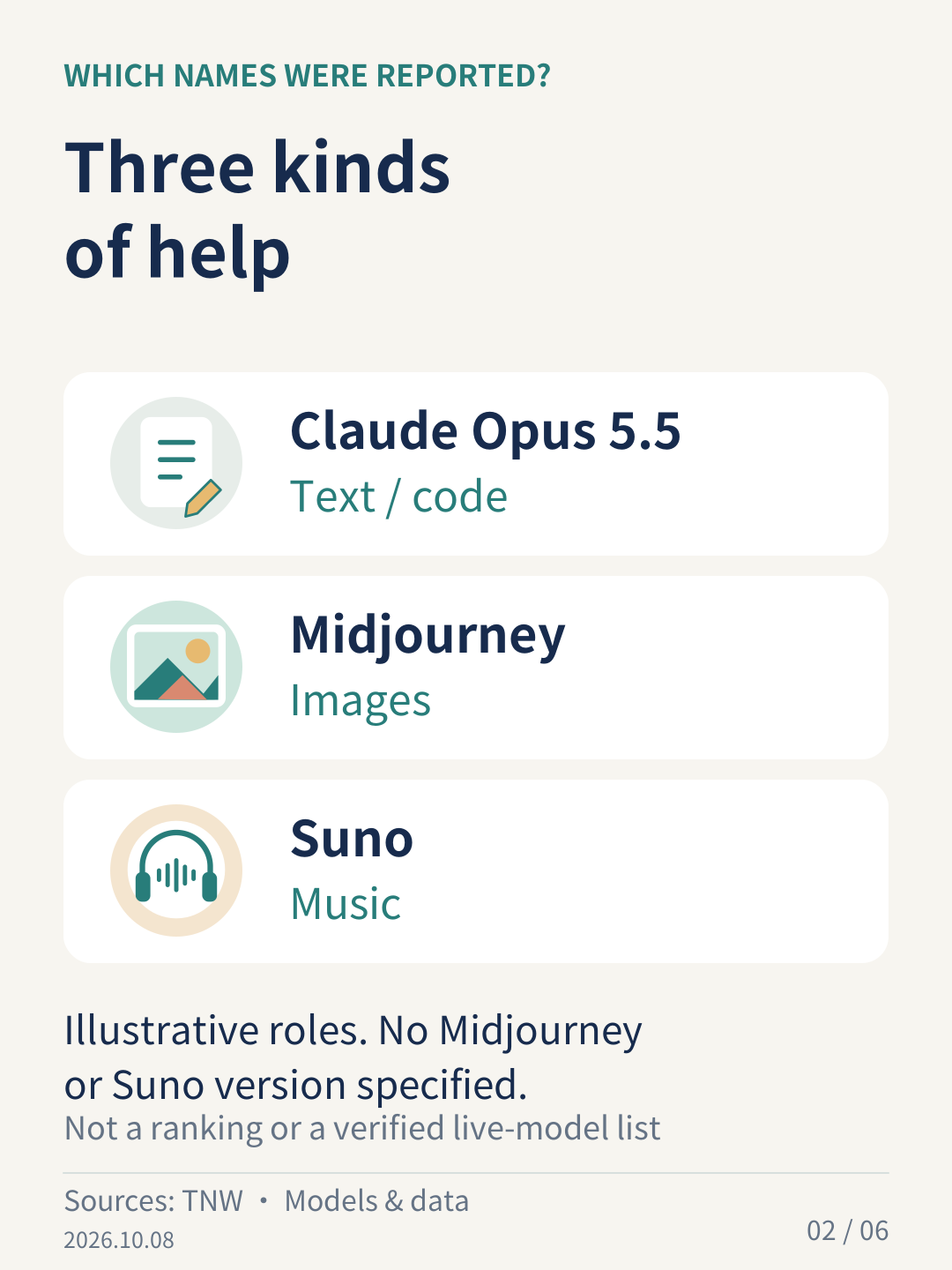
Grok Bot’s reported new direction goes straight into that calculation. The Next Web reported on 7 October that Elon Musk plans to use outside backends, naming Claude Opus 5.5, Midjourney and Suno. The proposed mix could bring text and coding, images, and music into the same conversation. The rollout of all three remains unconfirmed. 1
For someone who writes regularly, needs an occasional illustration and makes a little music, that could be a compelling arrangement. You could buy access to the mix of capabilities your projects require, while handing over some of the organising work between them.
The strongest case for Grok Bot would be its ability to carry your decisions through a whole project: remember the brief, coordinate revisions, preserve the parts you like and return files you can use. Any subscription saving would follow from how reliably it does that. The current plans have usage limits, and extra usage can incur charges. There is still a personal bill to work out.
What the three names could mean for your work
Think of Claude Opus 5.5 as the text-and-code part of this proposed arrangement, Midjourney as the image part, and Suno as the music part. Those roles help explain the appeal; the announcement leaves the actual assignment of jobs open.
Take an article about growing herbs on an apartment balcony. In the proposed mix, Claude Opus 5.5 could help turn your observations and checked references into a clear explanation. A Midjourney stage would need a visual brief: the size of the space, the plants to show and the style you want. A Suno stage for a narrated version would need a duration and a mood that leaves room for your voice.
You would still check the gardening advice, review what the illustration depicts and decide whether the soundtrack fits. The agent’s job is to carry those decisions between stages. Change the article to suit a small, shaded balcony, and the image brief needs updating too. Choose a quieter narration style, and the music brief should follow. That shared understanding is the part worth testing.
Grok Bot’s documentation describes persistent cloud computers and context that carries across sessions. Its security FAQ says model selection is managed by Cursor, with no user-facing model picker. 2 3
That makes the quality of delegation important. Someone who wants a specific model for a particular passage may prefer direct control. Someone who mainly wants the article finished may happily let the system choose. The practical test is whether your priorities survive those choices: the sources, the voice, the intended audience and the details you have already approved.
The second draft shows the real convenience
Imagine preparing a long article about a hobby you know well. You bring your notes, some references and a clear view. You want enough substance for readers to learn something, together with a few illustrations that make the explanation easier to follow.
A well-coordinated workflow keeps the argument and pictures connected. If you remove a section, the related illustration should be reconsidered. If you change the audience from beginners to experienced readers, the examples should change too. When you ask for a warmer tone, the factual claims and useful detail should survive.
This is also where an apparently convenient system could become frustrating. You approve a paragraph, then a later revision replaces it. You ask to lighten a picture, and the composition changes. You update a date, and an unrelated section disappears.
A useful agent keeps track of what each revision is allowed to change. “Update the opening date and keep the approved structure” is a precise instruction. So is “use this image unchanged and revise only the introduction.” These small boundaries matter when you have already spent time getting something right.
The handoff should end with an editable article, separate image files and a readable review copy. For a presentation, it should include slides whose text you can change. A beautiful preview loses some of its value when a tiny correction requires another generation cycle.
A trip gives the idea a more everyday test
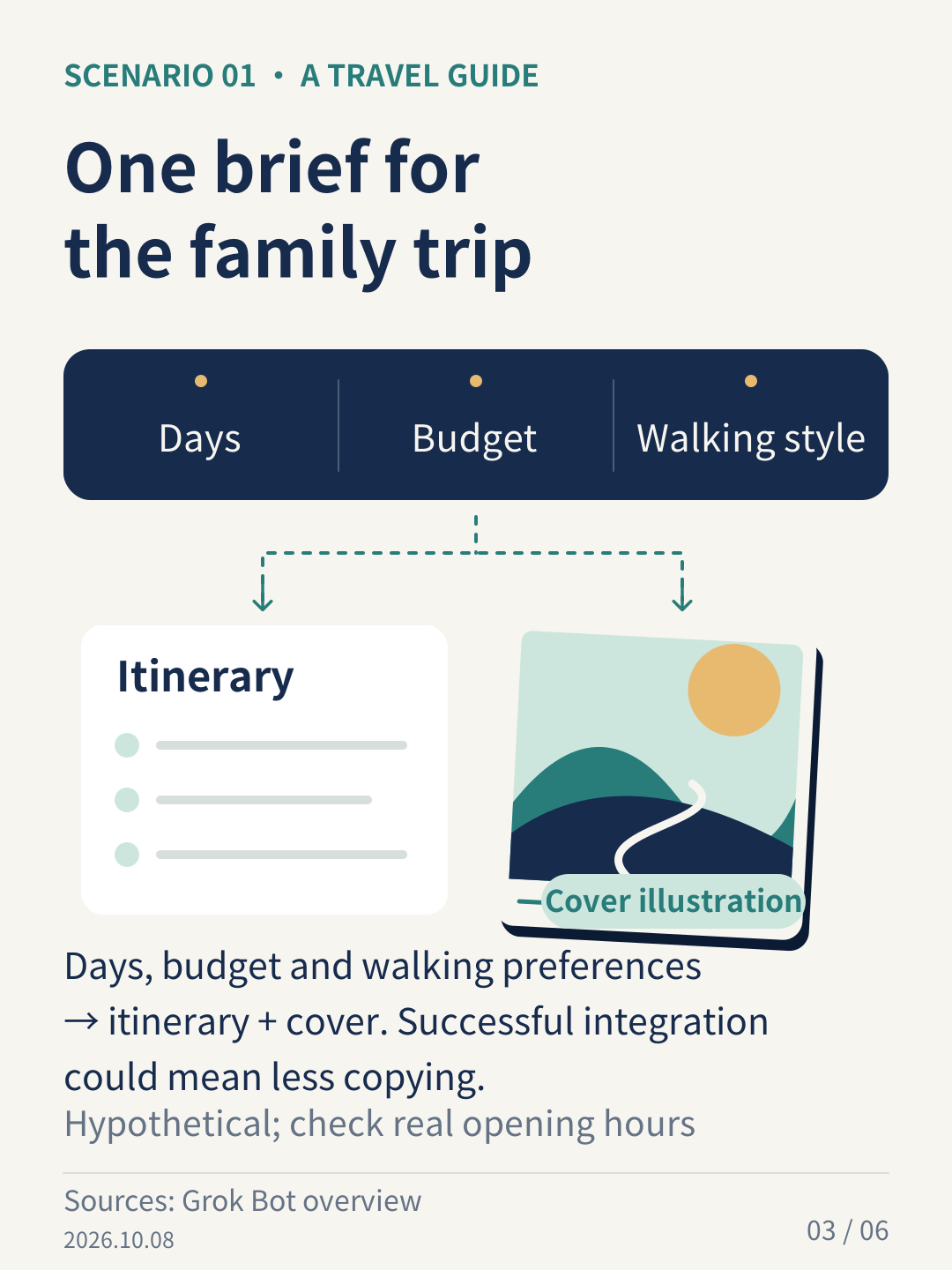
Consider planning a long weekend with friends. Your inputs might include arrival times, a few saved places, a spending range and how much walking everyone wants to do. A useful result would put those constraints into an itinerary that people can actually follow.
The creative layer could come later: an illustrated cover, a simple route explanation or a short introduction to each day. If someone arrives late, the agent should update the affected afternoon and preserve the rest. If rain changes the plan, the indoor alternative should fit the location and timing.
Fresh information still needs checking at its source. Opening hours, transport and booking conditions can determine whether the plan works. Generated artwork belongs in the decorative parts; the accommodation decision should use genuine property information and photographs.
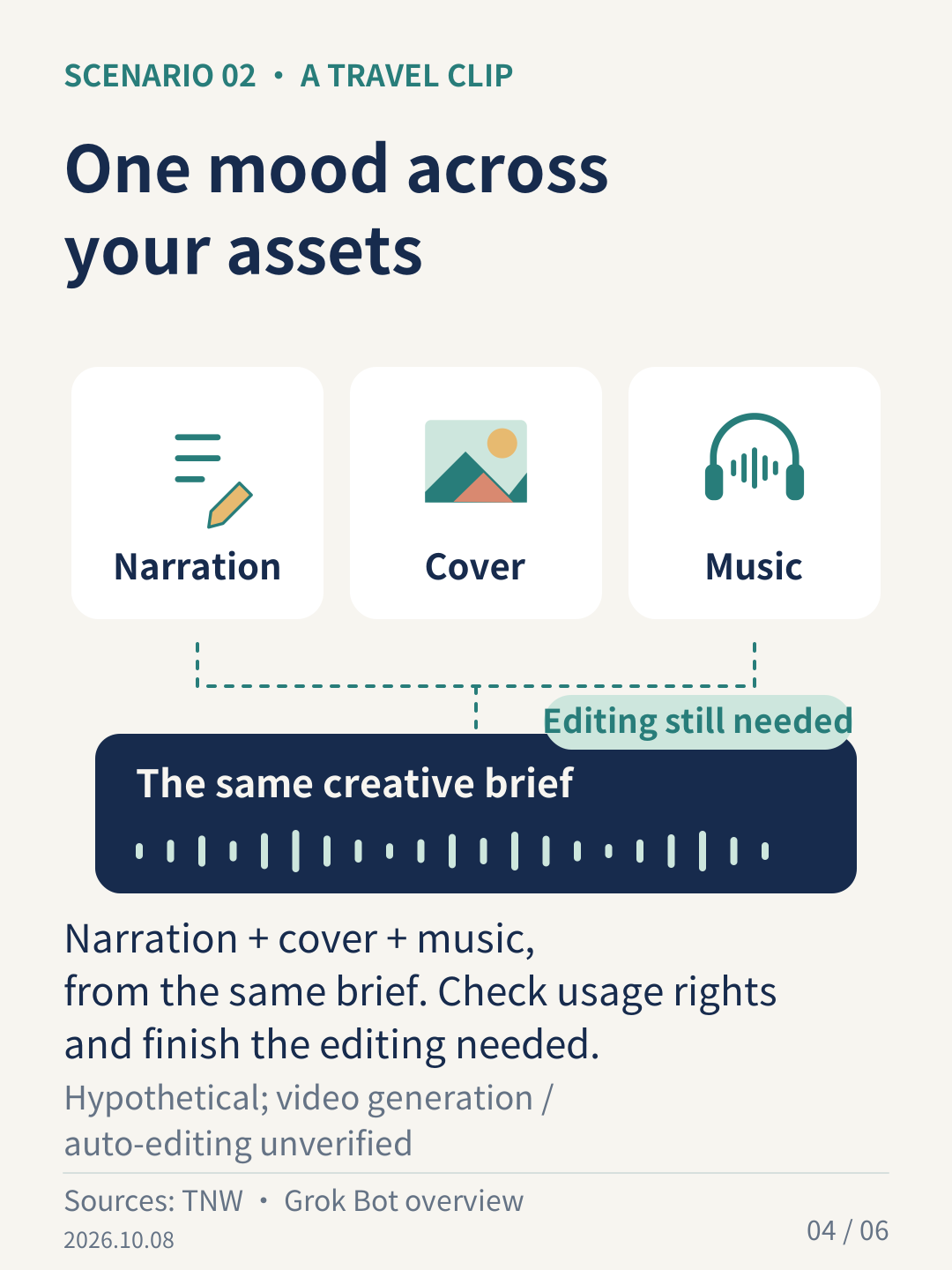
After the trip, the proposed combination could help prepare material for a short memory film: narration, a designed cover and a soundtrack. You would assemble those assets in your usual video editor, where you can decide the pacing and how the sound works with the footage.
For music, listen to how the piece serves the footage. Does it leave room for speech? Can you adjust the duration or ending without losing the passage you liked? Can you obtain the file format you need? Before publishing or monetising it, check the terms for the route and plan that produced it, including what happens to permissions if you later cancel. Save those terms with the project. A track that sounds good in a demo still has to fit your project.
Small personal projects also need an orderly finish
The same logic applies to a portfolio, a study guide or a small website. You might want help explaining your work, choosing a visual direction and making a simple code change. Keeping the brief together saves repeated explanations about your audience and preferences.
A useful workflow also leaves you in control of the result. For a website, that means being able to inspect the change, see it working on a phone and recover the previous version. For a study guide, it means keeping the sources close enough to check an explanation and correct an error.
Start with a project you understand well. You will notice a lost requirement or a weak explanation quickly, and you can judge whether the agent genuinely made the work easier. A task that combines unfamiliar material with unfamiliar tools is a much harder first test.
How to decide which subscriptions still earn their place
The light, occasional user has the clearest reason to try consolidation. A handful of useful pictures and one piece of music may be enough for the month. Paying separately for a large allowance in each category can be difficult to justify if most of it stays unused.
A frequent creator will have a different calculation. The reason to keep a specialist subscription may be precise editing, reliable character consistency, audio controls, an established project library or a familiar way to compare versions. Ask whether you can select and revise one part of an image, preserve a musical passage while changing its ending, or return to an earlier version. A conversational instruction can be convenient; direct editing controls can give you much finer control over the last few changes.
Access to Claude, Midjourney or Suno through Grok Bot would need to be assessed on its own terms. Check the actual editing features, export options, allowances and usage rights included through that route. The provider’s standalone paid product may include features or entitlements that require its own subscription.
A service may also have value beyond its AI features: long-form publishing, community features or an established workspace. Keep those benefits in the calculation. A subscription continues to earn its place when you still rely on something else it provides.
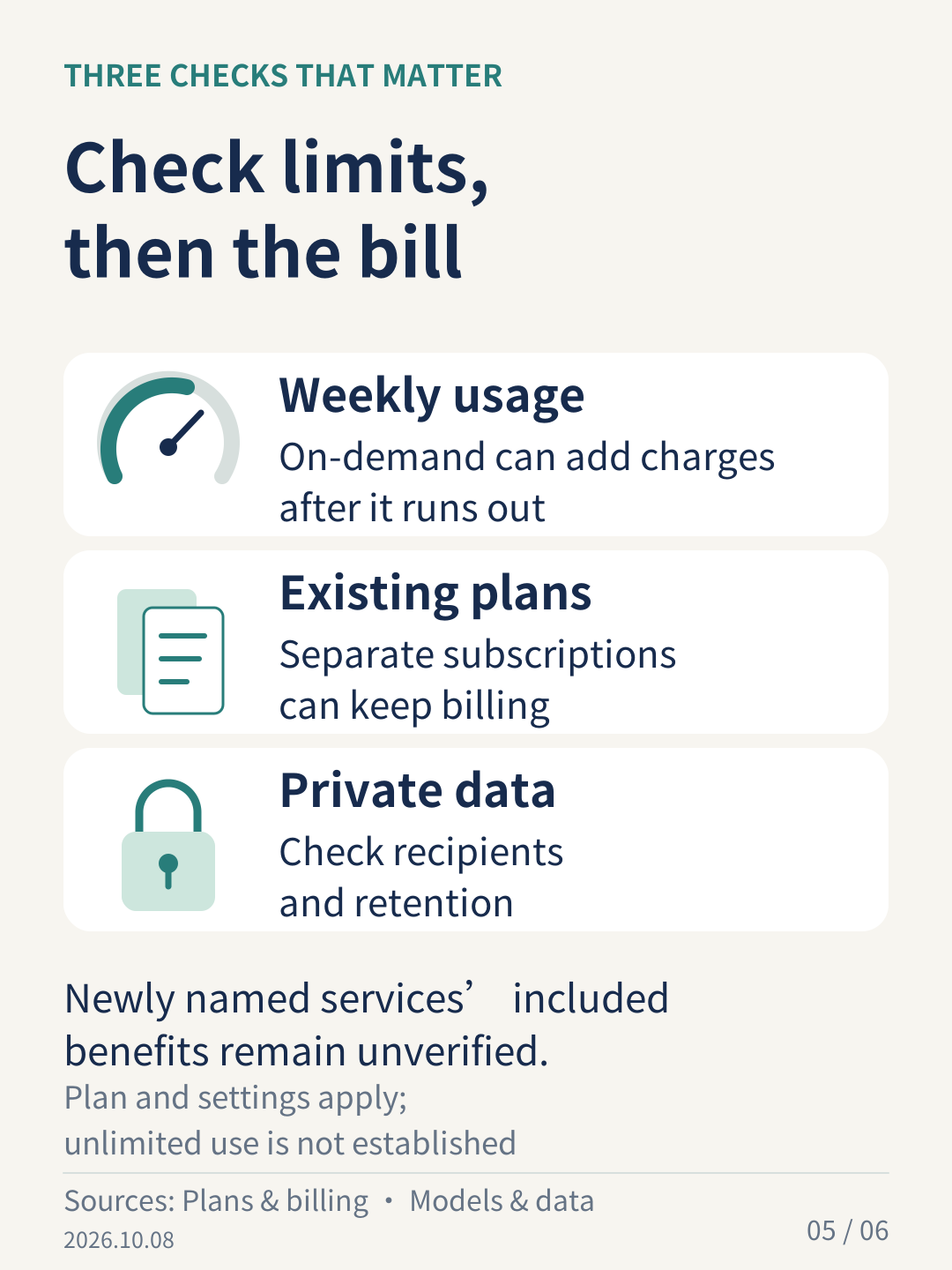
A few current billing details deserve attention. Cursor’s page lists X Premium+ among linked access routes; ordinary X Premium is a different tier. Included usage resets weekly. Optional on-demand work costs extra, and a running task can finish beyond the monthly limit. Existing subscriptions can continue billing separately, while Cursor and linked SuperGrok or X Premium+ grants do not stack. 4
Start the cash comparison with the subscriptions you can actually cancel. Subtract any increase in your spending on the integrated plan and its extra usage. If you keep the original image and music subscriptions for their editing controls, their bills stay in the total. If your existing plan already provides enough access, the additional cost of trying the workflow may be much smaller.
Then look at the time spent checking and repairing the work. A cheap first attempt can become expensive after several retries. A somewhat dearer workflow can be worthwhile if you finish comfortably before a deadline.
Measure the cost of an accepted result: an article ready to publish, a picture you can use or music that fits the edit. Keep quality consistent when comparing. Otherwise the lowest bill may simply buy a smaller or less useful piece of work.
Keep your files and your choices portable
The more an agent learns about you, the easier the next project could become. It might already know your usual audience, preferred tone, file formats and recurring project requirements. Those preferences are worth preserving.
Keep a short version of them in a document you control. Save your approved drafts, source links and original files somewhere you can reach independently. Before committing an important project, try opening an exported file in another app. Check that the useful structure survived, including editable text and any separate assets you need.
Data deserves the same attention. Ask which providers may receive the material you submit, how it is retained and what training-use terms apply to your account. The amount of information needed for a public article is very different from the contents of a private inbox. Begin with public references and a few deliberately chosen files, then expand access only when the benefit is clear.
Keep separate approval points for sending messages, spending money and publishing work. You should be able to review a complete draft without having it appear on your public account. Convenience is easier to trust when you understand what the agent can do next.
Try it on three jobs you already do
Once the relevant capabilities are available to your account, choose three representative tasks. One might be a substantial piece of writing, another a visual revision, and the third a small project combining text with another medium. Use real work whose quality you can judge.
First, write down what finished means. Specify the audience, length, sources, output format and any details that must stay unchanged. Give your existing tools and the new workflow the same starting material.
Second, include a deliberate revision. Change one meaningful requirement after the first result and record how many attempts it takes to reach something acceptable. Note whether you can make a precise correction yourself or have to ask for a new generation. That difference matters when the deadline is close.
Third, inspect the deliverables and the usage record. Keep a simple trial record: accepted output, retries, charges and remaining manual edits. Open the files and test them on your phone. Repeat on a different day with different material so one unusually good result does not decide the subscription.
By the next renewal, the choice should be concrete. Keep a specialist tool when its controls or output quality repeatedly justify the cost. Consider pausing an overlapping service when the replacement handles your normal work, delivers usable files and fits your spending limit. Check what happens to saved projects before cancelling.
Let the finished work decide
Grok Bot’s reported direction is attractive because it could make several kinds of creative help easier to use together. That would matter to people who have ideas worth developing and limited patience for moving them between apps.
The subscription decision should follow a complete piece of work, including the revisions. If the agent carries your choices through to a result you are happy to keep, it has earned a place in your routine. If that also lets you stop paying for tools you rarely open, the saving will be visible on your own renewal list.
Verification note · 8 October 2026
This analysis uses the reported announcement and official product documentation available on this date. The original X post was not independently retrieved; availability of every named integration remains unverified. Scenarios illustrate prospective workflows. Check current access, charges, editing features and usage rights before changing subscriptions.